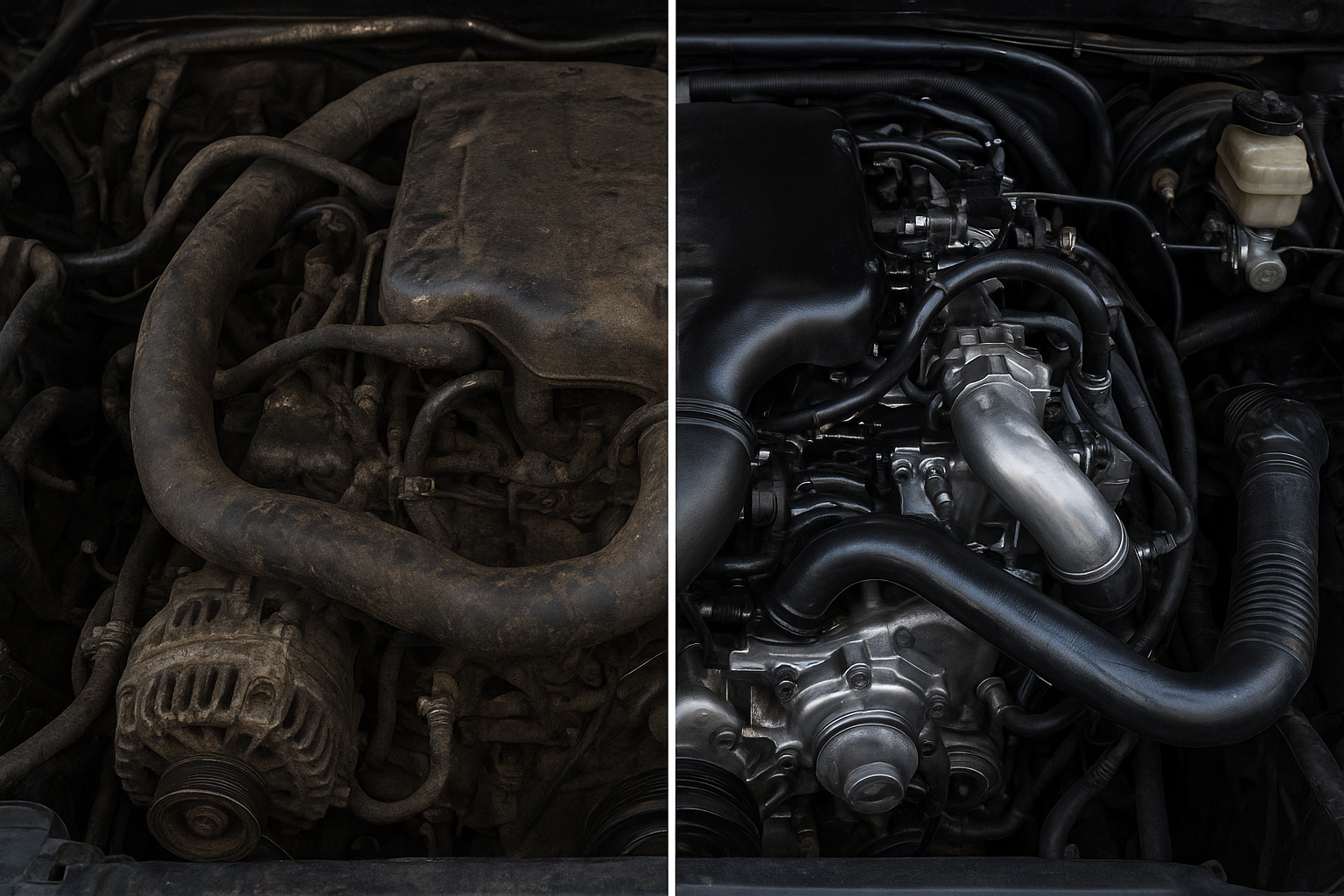
The Essential Diesel Maintenance Schedule Every Owner Should Follow
Diesel engines are legendary for their longevity. It’s not uncommon to see diesels hit 300,000, 400,000, or even 500,000+ miles. But here’s the catch: those high-mileage success stories all have one thing in common. Consistent, proper maintenance.
At Dusty’s Diesel, we see two types of trucks. Those that get regular care and run forever, and those that get neglected and need expensive repairs. The difference? Following a solid maintenance schedule. Let’s break down exactly what your diesel needs and when.
Why Diesel Maintenance Is Different
Diesel engines aren’t like gas engines. They run higher compression, generate more heat, operate under heavier loads, and have different fuel systems. This means they need:
- More frequent oil changes with diesel-specific oil
- Better fuel filtration to protect high-pressure injection systems
- More attention to cooling systems due to higher heat loads
- Regular inspection of emissions equipment (DPF, EGR, DEF)
Skimp on maintenance, and you’re asking for trouble. Stay on top of it, and your diesel will outlast your truck’s body.
The Complete Maintenance Schedule
Here’s what your diesel needs and when. This schedule applies to most modern diesel trucks, but always check your owner’s manual for manufacturer-specific recommendations.
Every 5,000 Miles (or 6 Months)
Oil and Filter Change
This is the foundation of diesel longevity. Diesel oil gets contaminated faster than gas engine oil due to soot, fuel dilution, and higher operating temperatures.
What to use:
- High-quality diesel-rated oil (CK-4 or FA-4 spec)
- OEM or premium oil filter
- Correct viscosity for your climate (typically 5W-40 or 15W-40)
Why it matters: Clean oil prevents bearing wear, reduces deposits, and maintains proper lubrication. Contaminated oil causes accelerated wear and can lead to catastrophic failures.
Fuel Filter Replacement
Modern diesel injection systems operate at incredibly high pressures (30,000+ PSI). Contaminated fuel can destroy injectors that cost $500+ each.
What to check:
- Replace primary fuel filter
- Check for water in fuel/water separator
- Inspect fuel lines for leaks
- Monitor fuel pressure
Visual Inspection
Walk around your truck and look for:
- Fluid leaks (oil, coolant, fuel, DEF)
- Damaged hoses or belts
- Tire wear and pressure
- Battery terminals and connections
- Exhaust leaks or damage
This five-minute inspection can catch problems before they strand you.
Every 10,000-15,000 Miles (or 1 Year)
Comprehensive Fluid Service
Oil and Filter: Yes, again. Some owners push oil changes to 10,000 miles with synthetic, but 5,000 is safer.
Transmission Fluid Check: Inspect level and condition. Look for burnt smell, dark color, or metal particles.
Differential Fluid: Check level and look for leaks. Heavy towing accelerates fluid breakdown.
Coolant System: Test coolant strength and pH. Inspect hoses for cracks, check reservoir level.
Air Filter Replacement
A clogged air filter chokes your engine, reducing power and fuel economy. Diesel engines move massive amounts of air, so filters get dirty fast, especially in dusty conditions.
Check more often if:
- You drive in dusty or dirty conditions
- You notice reduced power
- You see black smoke (indicates rich fuel mixture from restricted air)
Battery Service
Diesel engines need serious cranking power. A weak battery struggles to turn over a cold diesel, especially in winter.
Service includes:
- Load test batteries
- Clean terminals and connections
- Check alternator output
- Inspect battery cables for corrosion
Replace batteries every 3-5 years, or sooner if you have starting issues.
Tire Rotation and Inspection
Rotate tires to ensure even wear. Inspect for:
- Uneven wear patterns (indicates alignment issues)
- Sidewall damage
- Proper inflation (critical for diesels carrying heavy loads)
Every 30,000 Miles (or 2 Years)
Major Fluid Services
Transmission Fluid and Filter Change
This is critical, especially if you tow heavy. Factory intervals are often too long for trucks working hard.
Why it matters: Transmission repairs cost $3,000-6,000. Fluid changes cost $200-400. Do the math.
Differential Service
Replace differential fluid in both front (if 4WD) and rear differentials. Towing heavy loads breaks down gear oil faster.
Transfer Case Service (4WD)
Often overlooked, but critical for four-wheel-drive operation.
Coolant Flush and Replacement
Old coolant loses its protective properties. Contaminated coolant causes corrosion, scaling, and overheating.
Use:
- OEM-spec coolant (often extended-life)
- Proper mixture (typically 50/50 with distilled water)
- Complete system flush, not just drain and fill
Brake System Service
Inspect brake pads, rotors, drums, and hardware. Diesel trucks are heavy, and towing puts extra stress on brakes.
Check:
- Pad and rotor thickness
- Brake fluid condition (should be clear, not dark)
- Brake lines for leaks or damage
- Parking brake operation
Replace brake fluid every 2-3 years. Old fluid absorbs moisture, reducing braking performance and causing corrosion.
Fuel System Deep Service
Beyond regular filter changes, consider:
- Injector cleaning or testing
- Fuel additive treatment
- Lift pump inspection (if equipped)
- Complete fuel filter housing service
Every 60,000-100,000 Miles (or 5 Years)
Major Component Service and Replacement
Serpentine Belt and Tensioner
Belts crack and glazed with age. A broken belt leaves you stranded, and can cause engine damage if it takes out the water pump.
Replace:
- Serpentine belt
- Belt tensioner
- Idler pulleys
Glow Plugs
These wear out over time. Failed glow plugs cause hard starting, especially in cold weather.
Replace all at once, not one at a time. It’s cheaper in the long run.
Steering and Suspension Components
Heavy diesel trucks with lifted suspensions wear out steering and suspension components faster.
Inspect and replace as needed:
- Ball joints
- Tie rod ends
- Control arm bushings
- Shocks and struts
- Steering stabilizers
U-Joints and Driveshafts
Trucks that tow heavy or have performance modifications wear U-joints faster.
Signs of wear:
- Clunking on acceleration or deceleration
- Vibration at highway speeds
- Visible play in driveshaft
Turbocharger Inspection
Turbos don’t last forever, especially on tuned trucks or those with poor maintenance history.
Check for:
- Shaft play (too much means bearing wear)
- Oil leaks at seals
- Blade damage
- Boost leaks at connections
Emissions System Service (if equipped)
- DPF cleaning or replacement (if needed)
- EGR valve inspection and cleaning
- DEF system inspection
- Exhaust system inspection
Special Considerations for High-Performance Trucks
If your truck is tuned or modified, maintenance becomes even more critical:
- More Frequent Oil Changes: Every 3,000-4,000 miles. Modified engines work harder and contaminate oil faster.
- Upgraded Cooling: Monitor coolant condition more frequently. Consider upgraded radiators and thermostats.
- Transmission: Consider more frequent fluid changes (every 15,000-20,000 miles) and upgraded filters.
- Fuel System: Use premium diesel and additives. Consider more frequent filter changes.
- Boost System: Regularly inspect for leaks, check clamps, and ensure the intercooler is clean.
The Towing Factor
Trucks that regularly tow heavy need more aggressive maintenance schedules. Towing is severe duty operation, plain and simple.
If you tow regularly:
- Cut all intervals in half
- Monitor fluid conditions more closely
- Inspect brakes more frequently
- Pay extra attention to transmission and differential service
- Consider upgrading to synthetic fluids throughout
Warning Signs Between Services
Don’t wait for scheduled maintenance if you notice:
- Any fluid leaks
- Check engine lights
- Strange noises
- Loss of power
- Hard starting
- Excessive smoke
- Unusual smells
- Vibrations
- Warning lights or gauges
These are your truck telling you it needs attention now, not at the next service interval.
The Cost of Neglect
Here’s what happens when you skip maintenance:
Skip oil changes:
- Bearing failure: $5,000-15,000 engine rebuild or replacement
Ignore fuel filters:
- Injector failure: $2,000-5,000 for replacement and labor
Neglect transmission service:
- Transmission failure: $3,000-6,000 rebuild or replacement
Skip coolant service:
- Head gasket failure: $3,000-5,000 repair
That $100 oil change doesn’t look so expensive now, does it?
Keep Records
Document every service. This helps:
- Track what’s been done and when
- Identify developing patterns
- Increase resale value
- Provide warranty protection
- Help technicians diagnose issues
Save receipts, write down mileage, and note any observations about your truck’s behavior.
Professional vs. DIY Maintenance
Some maintenance you can do yourself:
- Oil changes (if you have proper disposal)
- Air filter replacement
- Visual inspections
- Fluid level checks
Leave these to professionals:
- Transmission service
- Differential service
- Brake system work
- Fuel system service
- Emissions system work
- Any major repairs
Professional service ensures the job is done right, with proper fluids, correct procedures, and expert eyes that catch developing problems.
Trust the Experts at Dusty’s Diesel
At Dusty’s Diesel, we’ve maintained thousands of diesel trucks. We know what these engines need, when they need it, and how to do it right. We use quality fluids, OEM or better parts, and we catch small problems before they become expensive failures.
We also customize maintenance schedules based on how you use your truck. Daily driver? Long-distance hauler? Weekend tower? Competition truck? We’ll build a maintenance plan that keeps your specific truck running strong.
Start Today
Don’t wait for a breakdown to start taking care of your diesel. Whether your truck is brand new or has 200,000 miles, proper maintenance from this point forward will extend its life and save you money.
Ready to keep your diesel running strong? Call Dusty’s Diesel at (918) 973-3545 or stop by 8305 W. McKee Industrial Rd in Davis, OK. Let’s put together a maintenance plan that keeps you on the road and out of the repair shop. Your diesel deserves the best care, and that’s exactly what we provide.